
Dorm Janitor's Revenge
Advertisement
Games Overview
Dorm Janitor’s Revenge APK is a dark narrative game where observation, choice, and hidden secrets turn a quiet dorm into a psychological battleground.
Table of Contents
Dorm Janitor’s Revenge APK: When Late-Night Hallways Turn Into a Psychological Battlefield of Power
If you think campus life games are all about chill vibes, cute schedules, and harmless drama—yeah, this one is here to flip the table. Dorm Janitor’s Revenge is not trying to be cozy. It’s tense, gritty, and quietly unhinged in the best way. This game takes a seemingly boring role—the dorm janitor—and turns it into a slow-burn psychological experience where observation, resentment, and choice collide.
On the surface, the premise looks simple: you’re a janitor working the night shift in a student dormitory. Clean rooms, fix messes, keep things running. But that’s just the mask. Beneath it is a game obsessed with power dynamics, hidden stories, and the idea that people who are ignored for too long eventually start watching back. Closely.
This is not a game that screams at you. It whispers. And somehow, that makes everything hit harder.
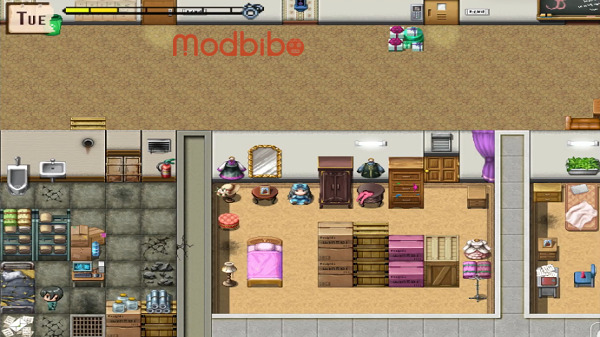
A Premise Built on Neglect and Quiet Anger
The strongest thing Dorm Janitor’s Revenge does is how it frames your role. You’re not a hero. You’re not a villain either—at least not at the start. You’re invisible. Students walk past you without eye contact. Staff treat you like background noise. The dorm itself feels alive, but you’re just the ghost keeping it clean.
That emotional setup matters because the entire game is built around it.
As nights pass, small details begin to stand out. Notes left behind. Locked doors that weren’t locked before. Conversations overheard through thin walls. The game slowly teaches you that the dorm is full of secrets, and your job gives you access to all of them. The question stops being “What happened here?” and becomes “What am I going to do about it?”
Revenge in this game isn’t explosive. It’s methodical. It’s personal. And it’s shaped by your decisions.
Gameplay That Rewards Observation, Not Speed
If you’re expecting fast-paced action or constant objectives popping up, you’re in the wrong hallway. Dorm Janitor’s Revenge is deliberately slow, and that’s a design choice that actually works.
Advertisement
Most of your time is spent doing routine tasks: cleaning rooms, taking out trash, fixing minor issues. But while you do these, the game encourages you to pay attention. Environmental storytelling is everywhere. A messy room isn’t just messy—it tells you something about the person living there. A broken object might not be an accident. A note in the trash might be more important than it looks.
There’s no hand-holding. The game trusts you to connect dots on your own, and that trust makes every discovery feel earned.
As the story progresses, new mechanics open up—access to restricted areas, the ability to interact with certain objects differently, and choices that affect how events unfold. None of these are explained in a tutorial-heavy way. You learn by experimenting, which fits the theme perfectly. You’re figuring things out the same way the janitor is: quietly, carefully, and alone.
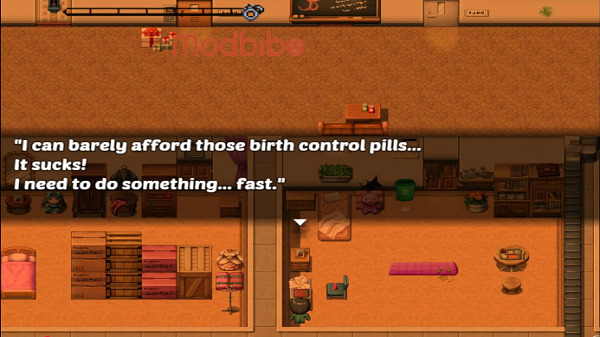
Choice and Consequence Are the Real Core
What really separates Dorm Janitor’s Revenge from other narrative-driven games is how it handles choice. There’s no obvious “good” or “bad” path. Every decision feels morally gray, and the game doesn’t judge you for it—other characters do.
You can choose to ignore certain discoveries and keep doing your job. You can intervene subtly. Or you can push things further, manipulating situations to expose people, protect yourself, or settle scores. Each approach leads to different outcomes, relationships, and endings.
What’s interesting is that revenge isn’t mandatory. The game never forces you to become cruel. But it does make cruelty feel understandable. After hours of being ignored, blamed, or disrespected, the temptation is always there. And the game lets you sit with that discomfort instead of resolving it neatly.
This makes the story feel more human, even when things start getting dark.
Atmosphere That Carries the Experience
Let’s talk about vibes—because this game is all vibes.
The dorm at night is unsettling in a subtle way. Flickering lights. Long empty corridors. Distant sounds you can’t quite place. The sound design does a lot of heavy lifting here. Footsteps echo too loudly. Doors creak just enough to make you pause. Silence is used as a weapon, not a break.
Visually, the game doesn’t rely on hyper-realism. Instead, it uses a slightly stylized look that makes everything feel just a bit off. Faces linger in memory. Rooms feel too quiet. The dorm becomes a character of its own, watching everything you do.
The lack of constant background music is a smart move. When music does appear, it’s usually tied to specific moments, making those scenes hit harder emotionally. You’re not distracted—you’re present. And sometimes, that’s uncomfortable.
Characters That Feel Real Because They’re Flawed
The students and staff you encounter aren’t just NPCs filling space. They’re written with intention. Some are rude. Some are careless. Some are clearly dealing with their own issues but take it out on others—including you.
What makes them compelling is that none of them are purely evil. Even the most frustrating characters have moments where you understand why they act the way they do. The game doesn’t excuse bad behavior, but it contextualizes it.
Your character, the janitor, is also surprisingly complex despite speaking very little. Their personality is shaped almost entirely by your actions. Are you patient? Bitter? Calculated? Resigned? The game reflects those traits back at you through dialogue options, internal monologues, and how other characters respond.
By the end, it genuinely feels like your version of the janitor, not just a preset role.
Advertisement
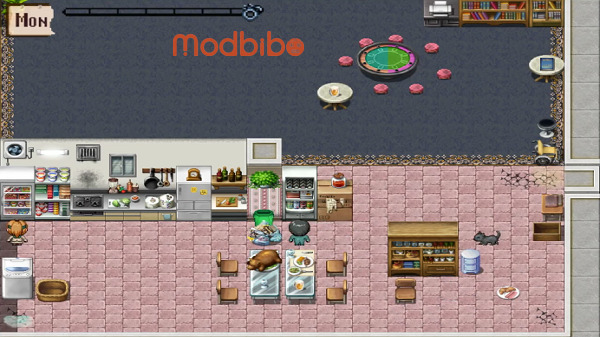
Narrative Pacing That Builds Tension Slowly
One of the riskiest choices the developers made was pacing—and it pays off if you’re willing to let it.
The first few in-game nights feel almost mundane. That’s intentional. The game wants you to settle into routine before it starts bending that routine. When something strange finally happens, it feels significant because you’ve already internalized what “normal” looks like.
As the story escalates, the pacing tightens. Tasks overlap. Decisions carry more weight. The dorm feels less predictable. You’re no longer just cleaning—you’re managing consequences.
The final stretch of the game can feel intense not because of action, but because of anticipation. You know your choices are about to matter in a permanent way, and there’s no going back.
Themes That Stick After You Stop Playing
At its core, Dorm Janitor’s Revenge is about visibility. About what happens to people society treats as invisible. It explores how power works in small, everyday spaces, and how easy it is to abuse without realizing it.
It also asks uncomfortable questions:
-
Is revenge ever justified if it comes from long-term mistreatment?
-
Does knowing someone’s secrets give you responsibility—or leverage?
-
Is staying silent a form of self-preservation or complicity?
The game doesn’t answer these for you. It lets you live with your answers.
That’s why it sticks. Long after the credits roll, you’re still thinking about the choices you made—and the ones you didn’t.
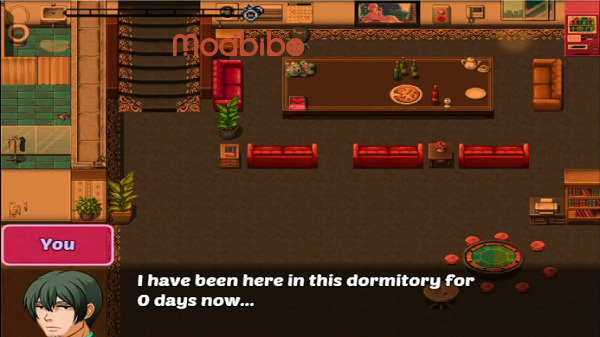
Performance and Replay Value
From a technical standpoint, the game runs smoothly for most players, with minimal bugs and stable performance. Load times are short, and the interface is clean without being intrusive.
Replay value is solid thanks to multiple endings and branching paths. Playing the game a second time with a different mindset can lead to a surprisingly different experience. Scenes you ignored before suddenly feel important. Characters you dismissed gain new meaning.
It’s not a game you’ll replay ten times in a row, but it’s definitely one that rewards at least one thoughtful return.
Final Thoughts: A Quietly Bold Experience
Dorm Janitor’s Revenge APK isn’t trying to appeal to everyone, and that’s its strength. It’s slow, introspective, and occasionally uncomfortable. It trusts the player to think, observe, and reflect instead of react.
If you’re into narrative-driven games that prioritize atmosphere, moral ambiguity, and character over action and spectacle, this one deserves your time. It doesn’t chase trends. It doesn’t over-explain itself. It just tells a story about power, neglect, and choice—and lets you decide what kind of person you become when no one is watching.